
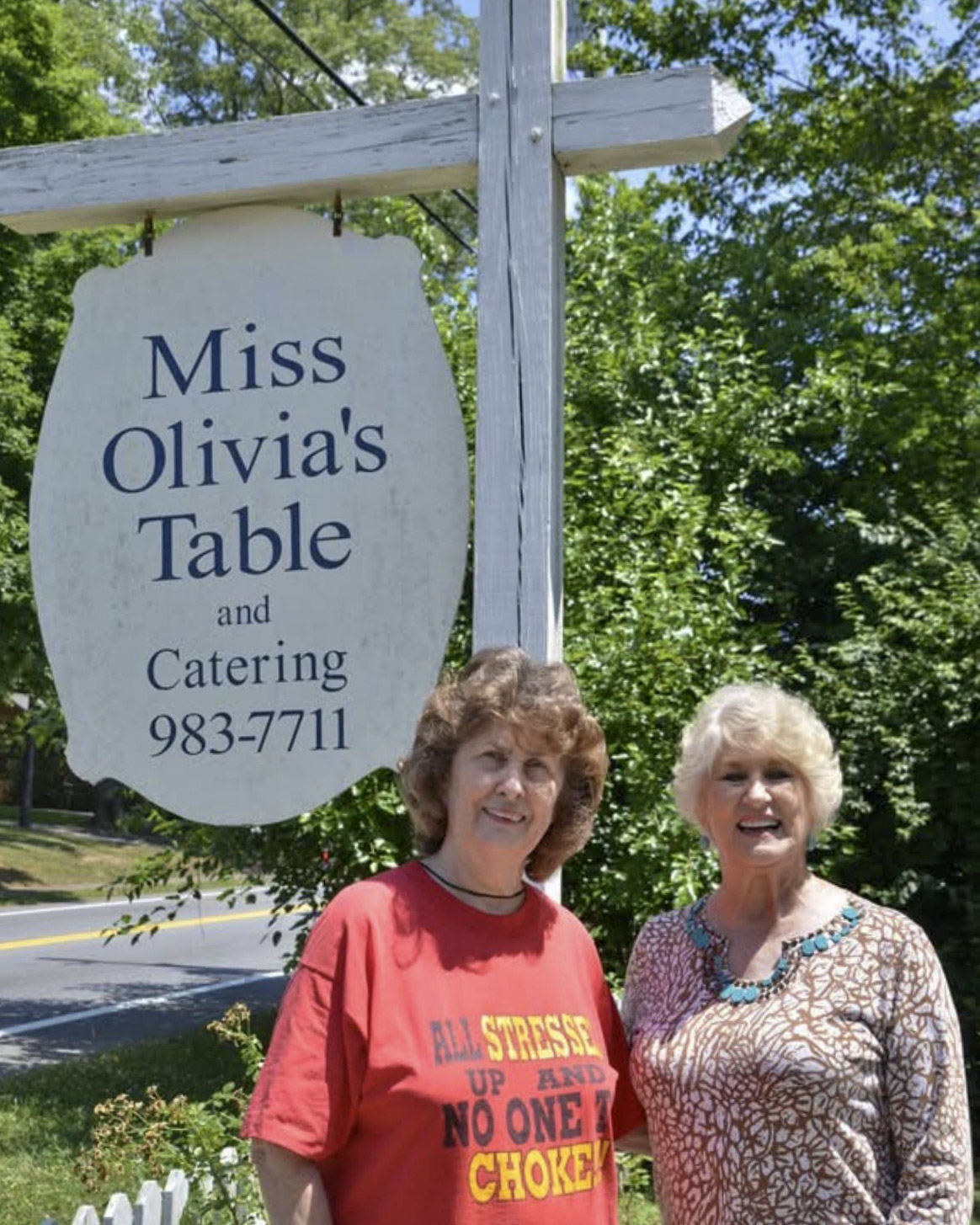
Eating at Miss Olivia’s Table in Maryville felt less like dining out and more like being welcomed into someone’s home, like stepping into a grandmother’s house while she prepared a Southern, home-cooked meal. The air was warm with conversation and the smell of something sweet and savory drifting from the kitchen as people lingered at their tables, talking about their lives while sunlight poured through the windows. Owner Olivia Sipe moved through the space with a smile, delivering plates to guests seated inside a house built in the early 1900s. Miss Olivia’s Table felt like home.
Born and raised in Maryville, Tennessee, Sipe opened Miss Olivia’s Table in the early 2000s, bringing with her decades of life experience and a clear vision of what she wanted the restaurant to be. More than a place to eat, Miss Olivia’s Table was built around hospitality, the kind that made people feel welcome, cared for and comfortable enough to stay awhile.
“When I decided to open the restaurant, I had a plan for how I wanted it to be and the people I wanted it to attract and make fat, happy and fed,” said Sipe. “And since I was the cook, and the owner, and the manager and the janitor, I did as I pleased, and it turned out pretty good.”
During its run, Miss Olivia’s Table welcomed guests for weekday lunch, opening most days around 11 a.m. and serving until about 2 p.m., a rhythm that matched the slow, intentional pace of Southern hospitality. Those midday hours became a quiet refuge for people looking not just for a meal, but for a place to sit, rest and be heard.

Sipe said she never asked customers personal questions, not even their names, but she was always there to listen. “I didn’t look at people’s checks when they wrote them. I didn’t know where they lived or what they did for a living. I only knew what they wanted to tell me,” she said. “I’d know what they liked to drink or their favorite dessert, but I never, ever asked personal questions about their lives, about their phone numbers, where they lived or anything like that.”
For Karen Farner, a visit to Miss Olivia’s Table began with a simple lunch invitation, but it quickly became something she remembered long after. The restaurant was set inside a house built in the early 1900s, a space that felt both unique and familiar.
Even when it was busy, the room never felt crowded. Tables were spaced just right, and conversations filled the room without overwhelming it. The menu changed often, and Farner says she was never disappointed trying something new. One dessert, a Kahlua Cake, became her favorite. When she asked Sipe about it, she didn’t receive an explanation. Sipe simply handed her the recipe from Sipe’s own cookbook.
Sipe was always present, drifting out of the kitchen to talk with guests, smiling and making everyone feel welcome. Over time, familiar faces appeared, and the restaurant became a gathering place rather than just somewhere to eat. When it closed, “We lost a jewel,” Farner said.
Closing Miss Olivia’s Table was not a sudden decision, but it was a heavy one. After COVID-19, the restaurant stayed open thanks to loyal customers who trusted Sipe to keep them safe, but business slowed. The house itself, more than 120 years old, needed repairs that no amount of goodwill could offset.
“It’s an overused term, but bittersweet fits,” Sipe said. “We managed to stay open, bless our loyal customers’ hearts, but we had very, very low volume.” Though the building had no structural issues, the cost of restoring and maintaining it became something the restaurant could no longer support.
Still, there was comfort in knowing the house would be cared for. Sipe said she was grateful it was purchased by someone who planned to restore it with love and respect for its age, rather than erase what it had been.
“I miss the folks that I knew what they were going to eat before they got there,” she said. “I miss the folks that always said something nice about the food.”
Even now, those connections haven’t entirely faded. Sipe still runs into former customers at the grocery store or around town. Occasionally, some of them come to her home for lunch, carrying a piece of the restaurant forward in quieter ways.
When asked what she hopes people remember most about Miss Olivia’s Table, Sipe did’t hesitate. “The food was good. The prices were acceptable. And they were treated with dignity, admiration and respect,” she said. “And 99 percent of the time, with honest affection.”
That approach shaped everything about Miss Olivia’s Table. The restaurant was not about exclusivity or spectacle. It was about consistency and care. Over 19 years, Sipe’s philosophy created something rare: a space where people felt known without being examined, welcomed without being questioned.
When asked how the restaurant changed her, Sipe laughed. “I ain’t changed since I was 18 months old,” she said.
But for the people who sat at her tables, something stayed with them: the meals, the conversations, and the sense that, for an hour or two, they belonged somewhere.
And Sipe knows exactly what her customers would want to hear from her now.
“I miss them,” she said.