

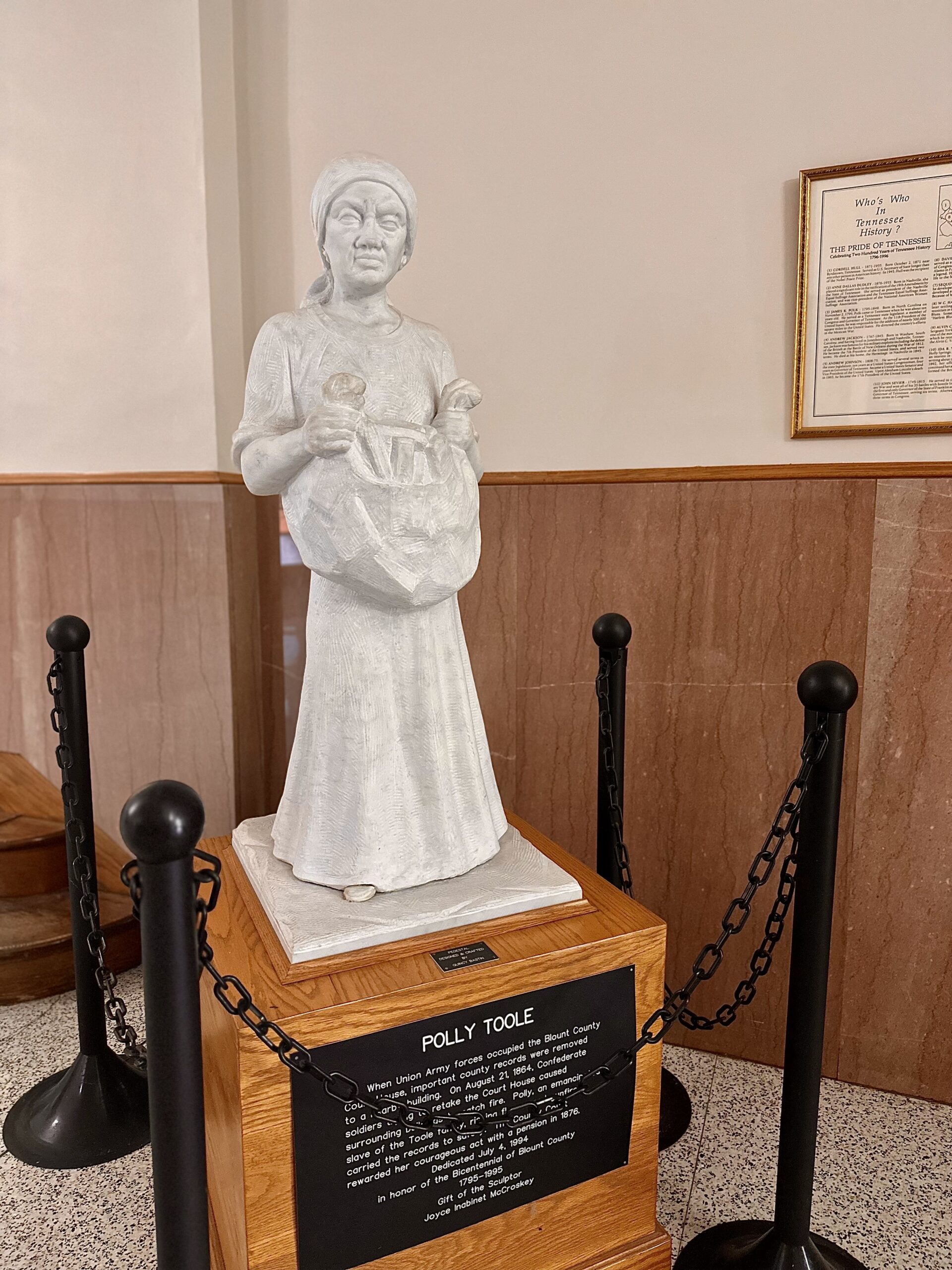
If you’ve walked through the lobby of the Blount County Courthouse, you’ve probably walked past a statue that honors an often-forgotten local heroine of the Civil War: Polly Toole.
Polly Toole is depicted in the statue by Blount County’s own Joyce McCroskey. She is holding up her apron filled with papers. If her burden looks heavy, that’s because it probably was, both in terms of its physical size but also its importance to local history.
Polly Toole was a former enslaved person, emancipated by merchant James Toole, who ran a store on Main Street. In the summer of 1864, Polly Toole lived nearby helping care for James’ mother.
That was the summer that the Civil War came to Maryville in its most direct and violent form. About 50 U.S. troops had holed up in the Courthouse. On August 21, 1864, some 2,000 Confederates under the command of General Joseph Wheeler rode in. Determined to root out the federals, Confederates resorted to setting fire to neighboring houses and businesses.
But the wind blew the flames away from the courthouse. Instead of menacing the Union soldiers, the fire threatened downtown Maryville. Ironically, many downtown residents were Confederate sympathizers, according to William Sloan, a Confederate soldier who was there that day. (While the county overall supported the Union primarily, many of the wealthiest professionals and merchants supported the Confederacy.)
In addition to the danger to people and businesses, the fire posed a danger to the vast collection of official county records, which—ironically—had moved into James Toole’s store across the street. County Clerk Washington I. Dearing had transferred the records when soldiers occupied the courthouse, presumably to save them from wartime depredations.
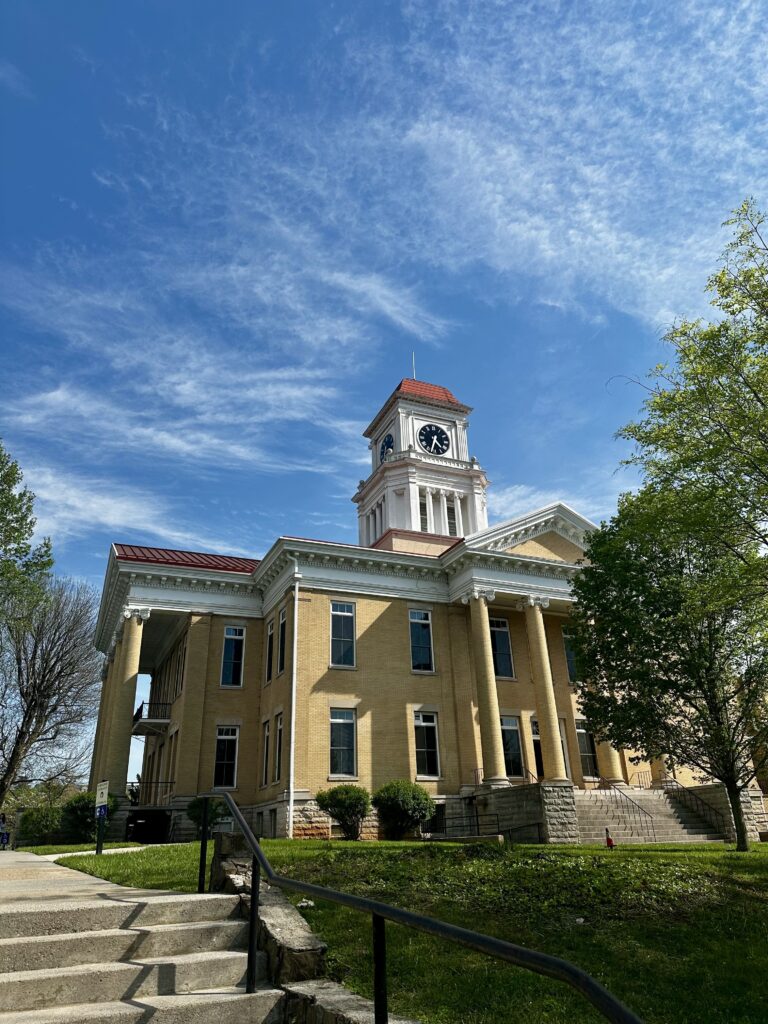
The 1864 fire might have been the end of all those records, including marriage licenses, wills, tax documents and the minutes of court proceedings, at an incalculable cost to Blount County’s citizens.
And that’s where Polly Toole comes into the story.
She rushed into the burning store and rescued a large number of the records—as many as she could carry. The county, eventually, rewarded Polly Toole’s bravery with a lifetime pension.
During Blount’s bicentennial in 1994, Polly Toole’s statue came to the courthouse. The next time you visit the courthouse, look for her, and remember the bravery of an African-American woman who risked her own life to help the rest of us.