

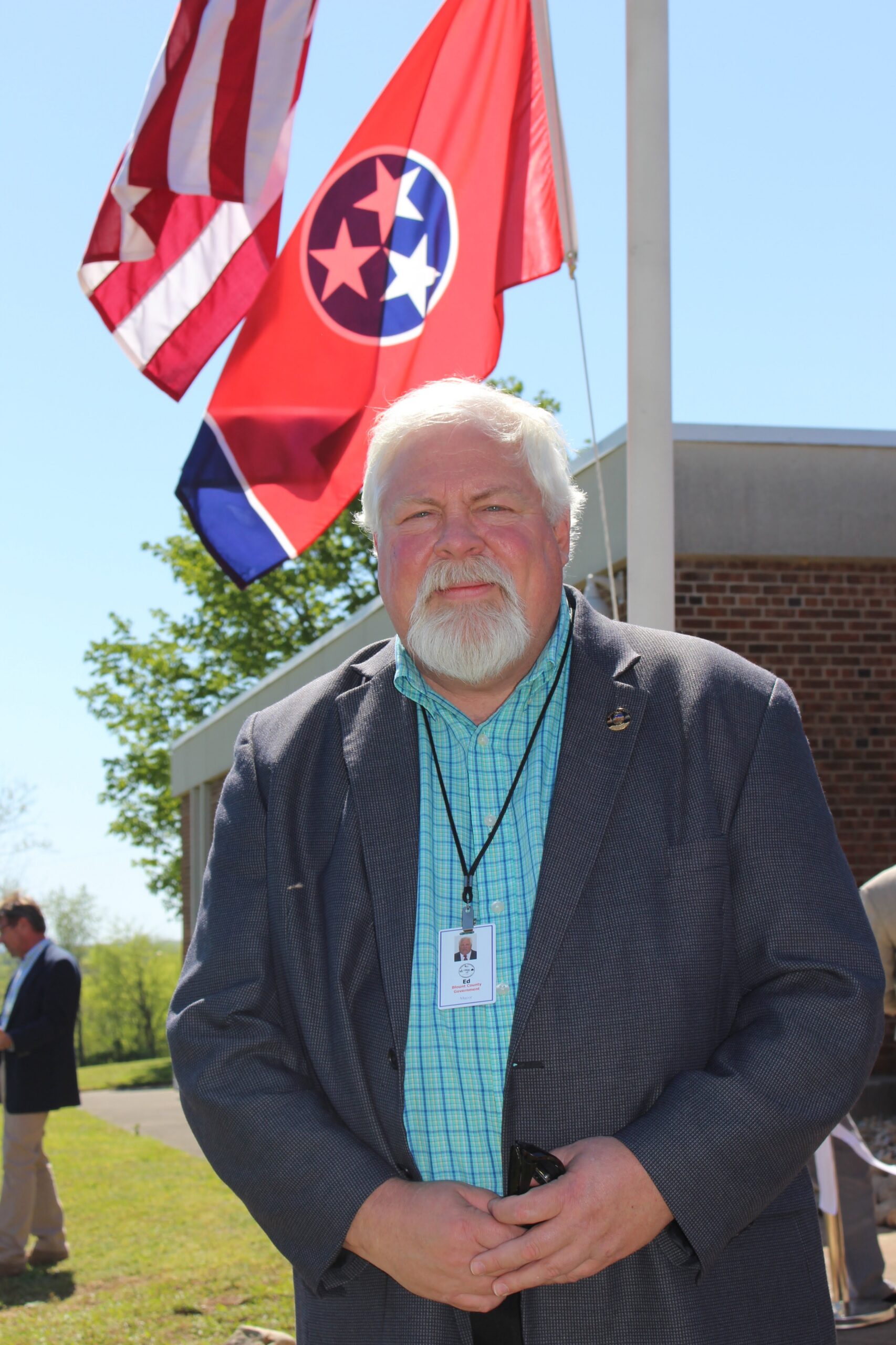
Ed Mitchell has served as mayor of Blount County for the past 16 years, and prior to that, as fire chief. His due diligence while serving the people of this community has been notable indeed, making decisions and exerting leadership without regard to political pressure, special interests, or any other inherent ideology.
We recently had a chance to sit down with Mitchell and discussed the issues that mean the most to him as he nears his voluntary retirement at the end of August.
Suffice it to say, his honesty, guidance, moral leadership, and due diligence have made him one of the most outstanding individuals to have ever served in the office of County Mayor. Here then, in his own words, Mitchell reflects on his time in office.
What was the transition and the learning curve like for you early on, when you left the fire department and assumed the mayor’s job?
I realized really fast that a lot more people really like the fire chief than the mayor.
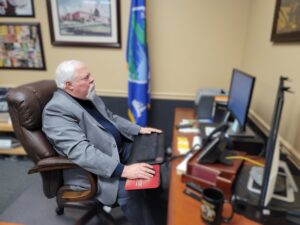
When I was the fire chief, everyone came in, and they were bragging on the fire department. We were the heroes. We were the ones that went out if your garage door didn’t open, or if your car didn’t start, or if your tire was flat. We’d run by and help you out. So everybody would come in and sit with me at my desk, and I would feel so good about everything, because they were just so happy.
Well, you can forget about that now. As the mayor, I find one out of every 10 people were OK when they come in, but mostly it’s been nine out of that 10 that were pretty dang upset about something that was going on in their community.
And I remember saying, “Boy, this is like a culture shock.” I went from sitting there in that outfit with the brass badges and all that stuff, and everybody was just patting me on the back and telling me what a great job I was doing. And then all of a sudden, I became the mayor, and I came in here with a dang suit on, and they were trying to grab me by my tie to string me up.
I realized that people had a lot of opinions on things, but as the fire chief, I thought most of them were pretty good, and they were happy about everything. As the mayor, not so much. As the fire chief, very few people would stop to speak to me when I would see them at the store. But as the mayor, people want to stop and talk to you. My wife said that a trip to Food Lion or Food City went from being a 30- to 45-minute trip to being an hour and 45 minutes to two and a half hours, because everybody on every aisle would stop us. If we were going down an aisle, we’d have to remember what we were getting on that aisle because when they’re getting ready to stop us, we’d forget what we’re on this aisle for by the time they finished with us.
When you came into this office sixteen years ago, what were your immediate priorities? And what made you want to run for mayor in the first place?
When I was elected, and the reason I chose to run,was because we had $50 million worth of debt, we had $400,000 unrestricted monies in our fund balance, and only enough in our debt fund to pay two or three months’ worth of bonds.
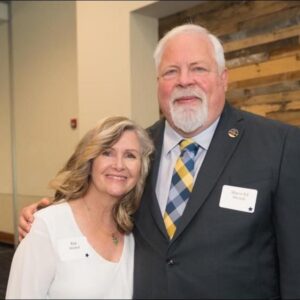
I’d retired from the fire department where I’d spent 30 years, and was enjoying doing my farming. I don’t hunt, fish or play golf, but I do love to farm and get on a tractor and mess with cattle. Plus, I started having grandkids. But then I thought, something’s wrong. We’ve lost our focus as our local government. I wasn’t worried about Nashville, and I wasn’t worried about about Washington. I was worried about the local economy because we were in a situation where, if it was your personal home finances, you’d be talking Chapter 11 or Chapter 13. That’s the kind of debt we had.
So I decided to run. No one thought I would, and by the grace of God, I did get elected, and I’ve been here 16 years. There were things I wanted to do. One of those things was that I wanted to get the pay up to where our employees actually could make a decent living and do steps for them to get raises. Because when I came here, they had not had any raises in a couple of years. So we finally did give them a raise, a $500 raise, a one-time raise, and everybody just got a $500 bonus.
Before that, the way people were being paid, and it’s kind of sad to say, it was based on how many votes their family was worth. It didn’t matter how many years you’d been here. It didn’t matter what your expertise was. You were paid kind of based on what your family was worth in votes. Our (Sheriff’s Office), I think, was making $32,000 a year, and in 2020, there was a real spike in housing, so with that kind of money, how could our police officers afford to live? They were all working overtime, second jobs, and anything else they could get.
How did you manage to change things?
I wanted to establish a play plan for our employees, one that gave them a job description, gave them something to look forward to, a stepping plan to raises, gave them a cost-of-living increase, and gave them those kinds of things every year. It took us three years to accomplish. The elected officials really did not support that, originally, but I finally got them on board and to where they supported it. We were able to restructure all of our employees and their benefit packages, put everything in their favor, and gave quite a big raise, and rightfully so. We were able to continuously move our (Sheriff’s Office) up to where they were getting paid to work, I think now it’s probably one of the highest law enforcement pay scales in East Tennessee.
What were your other priorities?
One of the things I thought was important was getting money back into our schools and getting a refocus on the kids and the teachers. It’s taken a long time to do that, but in the last two to three years, with the new school board members and the new superintendent, we’ve been able to give our teachers the largest raise they’ve ever had. We’ve been able to give our certified people more money. We’ve been able to put $85 million back into the high schools, into our CTE programs, into our buildings. We’ve been able to put millions of dollars back into our elementary schools. We built a high school and Eagleton College & Career Academy.
We didn’t have to borrow any money to do that in the 16 years I’ve been here. We’ve not borrowed a dime. We’ve paid as we’ve went. Right now, we’ve got $51 million in the fund balance, and about $41 or $42 million in the debt fund, so I mean, we’ve done very, very well about being able to be very frugal.
Was frugality something that was part of your lifeblood?
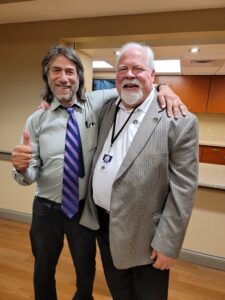
I was raised by a single parent. My mother died when I was nine. My dad went through the Depression and he was in World War II and lived pretty frugally. He didn’t believe in credit cards. He believed that if you had to borrow to buy something, and you thought about it long enough, you’d talk yourself out of it, or you’d say you didn’t need it. He didn’t believe in being in debt.
The only credit card he had was a co-op card so he could buy feed and fertilizer and keep track of it. And I took a lot of that on myself. I’ve not had debt in our lives in a long time. If it’s going to cost me to go into debt, usually my wife and I’ll sit down and realize we don’t really need it that bad if it’s going to cost us to go in debt. That’s sort of the philosophy and the way of thinking that I’ve taken in this job here.
I’ve always watched what happens in Washington, and how it seems to be this constant battle and just knocking of heads. You see a lot of that in Washington, and you see a lot of it in Nashville, and I didn’t want this office to be perceived as by anyone as that.
One of the wonderful things about you is that you have an open door policy.
Anyone that walks in that door right there is received and respected and taken care of. No one was seen as any greater or any less when they walked through that door. I don’t care whether you had a D or an I or an R after your name. I didn’t care what your nationality was. I didn’t care what your race was or what your religion was. When you come in here, you’re going to be respected, and you’re going to be treated with the respect you deserve, because this office is here for the people, and the respect of the people is what this office is about. And that’s just the way I’ve done it.
I’ve always wanted people to know it didn’t matter what group they were with, I was their mayor. I’m here for you. I’m not here for this group or that group. I’m here for everyone that’s a citizen of this county, and that’s just the way I’ve done it, and that’s been something that’s been close to my heart and something that I’ve always wanted to.
People can’t believe they can just walk into their Mayor’s office. I’ve always said, “Have a seat. We’ll sit here and talk about it.” Those are the things that I wanted to see happen.
One of things I’ve prided myself on even when I was with the fire department, was that I realized I’m never going to be the sharpest knife at the table. Things are going to work because of the people you have around you. You’ve got to realize what your limitations are, and what and how much you depend on those people around you, because the people around you either make you or break you. I’ve talked about this from the very beginning. I said this 10 years ago, that if we left and formed a company, we would be a Fortune 500 company by now. The people I have working for me are people that any company out here would go grab ahold of and make them some of the best leadership they could have.
I’ve just been very, very blessed that I’ve had people in my life that have made me have always lifted me and not dropped me.
What is your decision-making process like? What goes into it?
It’s all about what’s best for this county, and not trying to take care of somebody over here that’s needing to be propped up. It’s about serving the citizens and deciding what’s going to be the best for the people of this county.
If I look back on what I’ve done the week before or in the last month, and I see people struggling to buy groceries, or calculating only what they can afford, it would kill me if I thought that it was a decision I made that week or that month that had affected their budget enough to where they were having to decide whether they were going to get three cans of beans or 10 cans of beans to feed their family.
I always said I never want to walk out of a grocery store and feel like I that I just watched people struggle to buy groceries because of a decision I made, or due to an expenditure that I made as the mayor.
Do you take your work home with you at night, especially when you have a difficult day or you have to ponder a decision?
You can’t just walk away. You can’t put it out of your mind. There’s times you have to take it with you. But, you know, I tried to second-guess myself too much. I can have had one attitude leaving here and come back in the next morning and say to Amy, my assistant, “Wait a minute. We’re changing the whole dynamics of this!”
What are you going to miss the most?
I’m gonna miss the people.
When I was running, people would come in and say, “Well, you got to do this. You got to do that.” And I said, “Well, let me just tell you, if you’re wanting somebody fired, don’t vote for me. Or if you want somebody hired, don’t vote for me, because I’m not going to come in until I go in and know who I have around me. I’m not going to tell you I’m going to fire somebody or hire anybody. And I never did. So the things I’m going to miss the most is probably being in the center of things.
This is the center point whenever you’re trying to do the things that you’re doing, whatever you’re doing. You should always say, “Well, let’s start at the center point of the county, the place where everything happens. This is it. This is where it happens. Nothing happens in this county that doesn’t in some way start or have an effect here. We’re engaged in it. That’s just the way it is. So I’m going to miss that, and I’m going to miss the people, because a lot of friends that I’ve had over the last 60 or 70 years of my life just drop in and see me here. I feel a lot of pride in that.
I’d imagine you’ve made some great memories.
When I drive by here on the weekends, just driving by this courthouse, I’ll think we really make some good things happen in there. People have no idea. People stop at that red light right there and never look over at that courthouse. Never look at the memorial, never even think about voting. And I drive by, and I think, my gosh, I’m just thinking of all the good things we got done the last week in that courthouse. You know, we did a lot of good things for a lot of people in this county and made good things happen.
So is there anything that is still yet to be accomplished?
Well, I want to get this budget passed, and I want to lower taxes again. I’d like to see us offset that latest assessment to where it’s not costing everybody a whole lot more money. And whoever wins the mayor’s race, I would want them to come in here and let me spend some time with them, and let’s talk about the things that are important and the things that aren’t important, and the things you really need to be caring about, and what you need to be doing out there in the community, and how important that is to be out in the community doing the things which you should do.
There’s nothing like going to a 70th wedding anniversary for an elderly couple and doing a proclamation. I remember Miss Flowers turned 100, and I’d done a 75-year anniversary proclamation for her and her husband, who had just passed away. She just cried and hugged me. She said, “You don’t know how much this means to me.” And I was like, “Yeah, I do. I do know how much it means to you, because it means the same to me, too. It means a lot to me to do this.”
Is there anything else that’s left unfinished?
I would like to get the transition facility opened. We’re also redoing the health department with some grant money. I’d like to be there the day we open that door. I’d like for that to happen before I leave. Those are two things that would mean a lot to me. Those are things that are going to last for many, many years after I’m gone, and they’ll continue to serve a lot of people.
You would not believe how many people use our health department for their primary health care. We probably have one of the best health departments in the state of Tennessee. Not many people realize it, but if you’re sitting in this office, you know it, and you want to make sure that it continues to serve its 600 to 900 people a day.
How do you plan to spend your retirement?
I’ve never been to Yellowstone. I’ve never been to the Badlands. I’ve never been to Montana. I never got my kicks on Route 66. I’ve never been on the Natchez Trail. It goes from Nashville to Biloxi. The (Native Americans) used that to go from the Gulf of Mexico to Nashville. It’s got so much history, and it’s in our backyard.
I’ve never done the Blue Ridge Parkway from one end to the other. I’ve never been to Mount Mitchell, the highest point east of the Mississippi. I’d love to go to the upper Northeast when the leaves are changing. They say it’s just a wonderful thing just to drive up into the New England states at that time of year.
I’ve got a my back porch, and I’d like to have it cut, at least screened in, where we could sit out there and watch the deer and the rabbits and the turkeys and everything in my backyard. Those are some things I’m gonna do.
I know you’re a music guy, so do you plan to go out and see some concerts?
I’d like to go see Pistol Creek play. Ed [Harper] and me and Bill [Cabage] grew up together. We graduated high school at the same time.
What would you tell people about this beautiful place we call home if you were to talk to somebody who had never been here?
I’ve always asked myself, how do you walk through these mountains or along these rivers and not say, “My gosh, this has got to be the most beautiful place in the world to live?”
I must say that the people have a lot to do with that, too, because you have such good people with good hearts and good souls who care about one another. Where else do you have the mountains on one side and the river on the other side? It’s kind of like it’s the main aorta of the heart coming right through.
Here we are, we’ve got all this beauty. You’re looking at the most beautiful mountains that you’ve ever seen in your life. I’ve got goosebumps here just thinking about it. Me and my wife talk about it all the time. We’ll just be going down the road sometimes, and she’ll say, slow down, look at the mountains, or look at the river, or look over there in that field. And we’ll just stop and slow down and do that. I know why people move here.
One final question, are you going to play Santa again this year like you always do? Please, give us a scoop!
I’m still thinking about that. We’ll see.