(photo credit: Karla Moheno)
Tommy Stinson has spent most of his adult life trying to figure out what comes next.
Sometimes, it’s another band. Always, it’s another album. Sometimes, another collaboration … another tour … another unlikely chapter in a career that began when he was barely old enough to understand what a career in rock ’n’ roll might mean.
And sometimes what comes next has simply been a couple of acoustic guitars, a friend and the realization that sitting around doing nothing is not really an option.
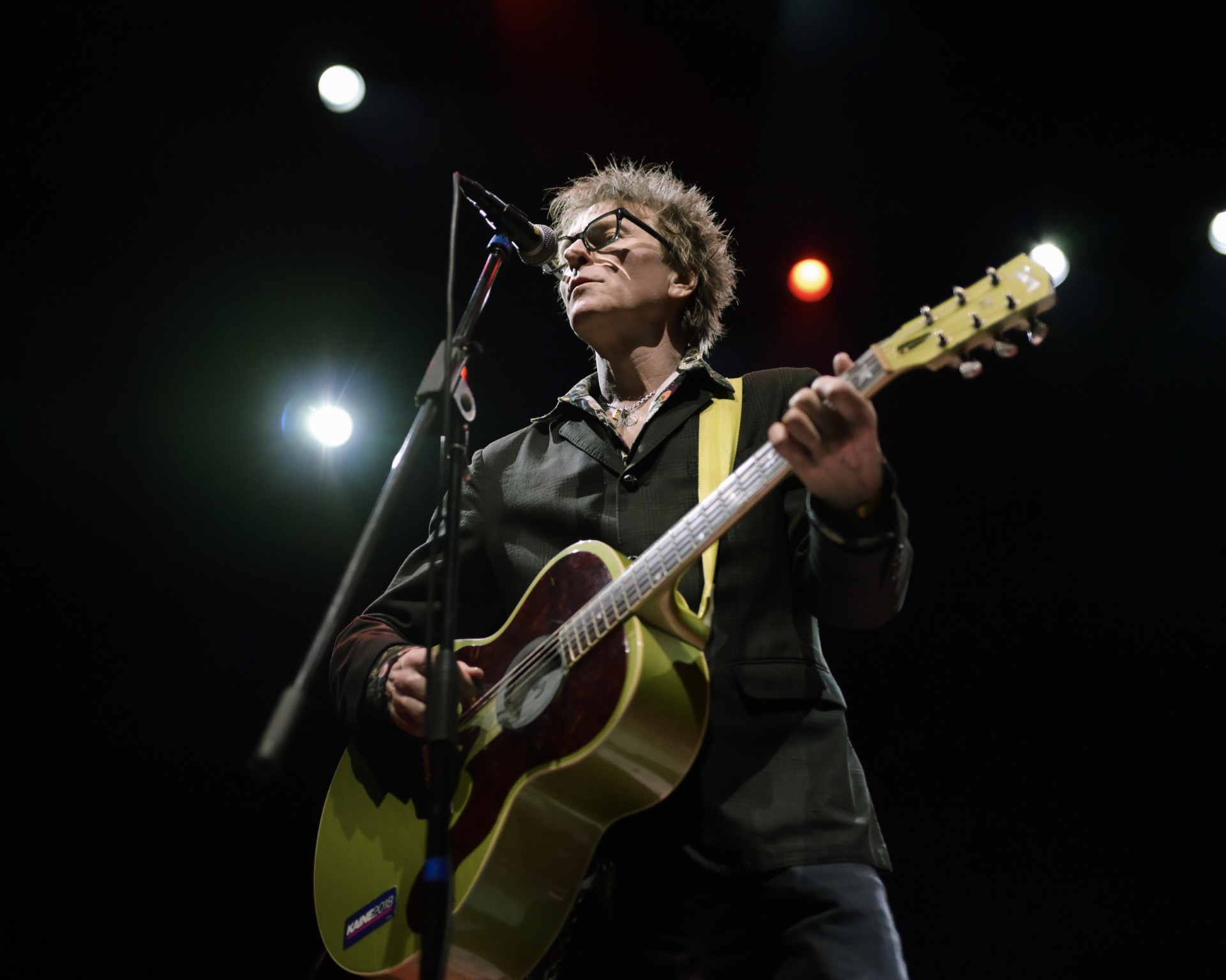
“I’m always kind of out there doing something,” Stinson told Let’s Be Blount during a recent phone interview. “I’m getting ready to put a record out in the new year, so I’m out there right now playing these new tunes in a stripped-down format, just working them out a little bit by playing them in front of people.”
Songs that maintain their fluidity between the locked-in studio sheen of loud guitars and pounding drums, and the low-key thrum of acoustic recreation in a listening room environment, are the winning formula, he added, an instinct that remains intact more than four decades after Stinson first picked up a bass and co-founded The Replacements. It’s one reason his current musical life bears only passing resemblance to the one he inhabited when he was standing onstage with The ’Mats, as hardcore fans affectionately labeled them, and his later-in-life outfit, Guns N’ Roses.
“At this point in my life, I figure I can do what I want, so I embrace that pretty well,” said Stinson, who swings through Blount County on Sept. 23 for a performance at The Bird and The Book on East Broadway.
He’s looking to put out his new solo record in the spring, and it’ll be the first to bear his name since “One Man Mutiny,” which was released in 2011. It includes contributions from musicians from around the country and Canada, and songs that draw from different corners of his catalog as well as contributions from friends, but Stinson describes the finished product as more focused on his own muse than some of his previous work.
“There’s no title or release date yet; I’ve still got a photo or two I need to have taken to go along with it, but I’m finishing it up as we speak,” he said. “Who knows? By the end of the day, I might have something. I’m gonna have different people from all over playing on it. It’s a mix of all my stuff, old and new. Just a little bit of all of it.”
That it runs the gamut of a multifaceted career is telling, because Stinson has rarely seemed interested in allowing the end of one musical chapter to become the end of his story.
“I tell people all the time, there’s no method to this madness — I just do my thing,” he said. “I’ll go back and fix things and work them out as I go. For the most part, it’s a pretty visceral thing, because I just go with it. I kind of just write that way in general, whether it’s a pop ditty or an emotional bit.”
And just as with his creative spark, there’s never been a linear evolution to his career. When The Replacements broke up in 1991, Stinson formed Bash and Pop. When that chapter ran its course, there was Perfect. Then came Guns N’ Roses, followed by Soul Asylum and a succession of solo and collaborative projects. In 2017, when this reporter, working for The Daily Times, interviewed him about Bash and Pop and Cowboys in the Campfire, Stinson was already talking about the latter project as something born partly from the simple fact that he had nothing else going on.
“I didn’t have Guns N’ Roses or Replacements gigs anymore,” Stinson said during that 2017 interview. “I had the time last year, and I thought, ‘I gotta do something,’ because I’m really not good at sitting around doing nothing.”
So he and longtime friend Chip Roberts did another “something.” They started playing small house-party shows with two acoustic guitars, drawing from Bash and Pop, Stinson’s solo work and songs the two were writing specifically for Cowboys in the Campfire. It was intimate and stripped down, almost the opposite of the giant machinery associated with Guns N’ Roses.
But that contrast is exactly what makes Stinson’s career so interesting. He has never seemed particularly interested in recreating whatever the previous thing was. Instead, he keeps moving. And the relationships tend to move with him.
Stinson still keeps in touch with members of Guns N’ Roses, he said, because after spending so many years together, they were “like family for the longest time.” He’s less in touch with Paul Westerberg but remains closer with Chris Mars, and he described many of those friendships as long-lasting.
“I didn’t join Guns because it was a good job,”
Tommy Stinson
“I didn’t join Guns because it was a good job,” he said.
That distinction matters. For Stinson, the value of a band has never been reducible to employment. The music matters, certainly, but so do the people with whom he makes it, the experiences they share and the strange bonds that survive long after the amps have been packed away and the guitars stowed in their road cases.
His years with Guns N’ Roses seem to have reinforced that idea. In the 2017 interview with The Daily Times, Stinson described the experience as creatively transformative, particularly because he suddenly found himself collaborating with musicians of a caliber he hadn’t previously encountered.
“The learning curve was off the string,” he said at the time. He also talked about the good times, the world tours and the fact that most of the musicians remained his friends even after he left the band. The lesson wasn’t simply how to play in a giant rock band — it was how to navigate his way into a corporate ensemble populated by players whose backgrounds looked nothing like his.
“With Guns, I really was one of six or seven guys kind of tasked to make a record (2008’s ‘Chinese Democracy’),” he said. “All of us kind of came from different places, and because of all of that, it was a challenge to figure out, but it was also a really great gift to figure that out with those people and to finish that record.”
In the current solo record he’s working on, he said, there is some of that same collaboration, but less of it. The new album is “more singular.” Even so, the fingerprints of all those previous relationships are scattered across it. There’s some Bash and Pop and some Cowboys in the Campfire. And while he elicited contributions from friends scattered here and there — a drummer in Montreal, a guitarist in California — Stinson himself filled in much of the rest.
“A lot of it is me, finishing up my tracks on them,” he said. “When I work with people, I often get them to play, tell them how to play, then change it.”
In that sense, the new record isn’t simply another solo album. It is a sort of musical map of where Stinson has been, but it’s also evidence of where he’s going. And it hasn’t always been an easy journey. Back in 1989, The ’Mats, as they’re fondly referred to by diehard fans, were signed to Sire Records, and mainstream rocker Tom Petty had just released “Full Moon Fever.” Petty himself was a fan of the band and handpicked them as an opening act … and it didn’t go well, Stinson recalled. The Replacements were headliners in their own right, but the culture clash between the two acts couldn’t have been starker onstage, he added.
“We had been selling out places on our own so a lot, and then we were the opening act, essentially playing for nobody for two months,” he said with a laugh. “It was brutal and painful and pointless. It was a corporate move, and it didn’t work well, because the circumstances were wrong for us.
“We were established enough that opening up and playing for nobody really wasn’t advantageous to us. That tour did nothing for us except cement the first volley of, ‘This isn’t gonna last long.’”
He’s been in that position more than a few times, he added. But perhaps the defining characteristic of Stinson’s career is that he doesn’t seem particularly interested in dwelling there. He rolls with whatever circumstances come next, and performing at The Bird and The Book will be, for him and for fans, a solid hang.
“They’re gonna get me having a really good time. Being the social butterfly I am, I roll with myself and whatever circumstances I get into,” he said. “I’m lucky to get to do it.”
That last sentiment may be the closest thing Stinson has to a career philosophy.
In 2017, when The Daily Times interviewed him, he talked about his desire to keep moving, his need to find something to do after the end of his major band gigs and the improbable collection of projects that followed. At the time, he was simultaneously working on Cowboys in the Campfire, producing a television show and considering other projects. He summed up his restlessness with a line that now reads almost like a thesis for the past decade of his life:
“I’m just trying to keep myself from sinking.”
Nine years later, he doesn’t sound like a man particularly worried about sinking. He sounds like a man who’s figured out that staying afloat is less about finding the perfect band, the perfect record or the perfect career move than about continuing to make “something.”
A song. A record. A collaboration. A stripped-down performance. A new musical experiment. A conversation with an old friend. Something. And that explains why the musician who once stood beside Axl Rose on some of the biggest stages in the world can now be perfectly comfortable talking about a record assembled partly by himself, partly by friends scattered across the country and partly by whatever happens to feel right in the moment.
The circumstances change. The people change. The bands come and go, but the impulse — that primal call of rock ’n’ roll to do it — does not.
And on Sept. 23, when Stinson brings that accumulated history to The Bird and The Book in Maryville, he’ll do so not as a museum piece from The Replacements or Guns N’ Roses, but as the latest version of a musician who has spent more than 40 years refusing to let the end of one thing become the end of anything.
The Bird and The Book is located at 1509 E. Broadway Ave. in Maryville, below the upstairs bookstore and café, Southland Books. Doors open at 6 p.m. on Sept. 23, and the show begins at 7 p.m. Tickets are $31.30 for general admission and can be purchased at www.tommystinson.com.